Nowe Horyzonty coraz bliżej, więc nawet dobrze, że na Festival Scope nieco spokojniej (edit 13/7: nieaktualne już), bo można się lepiej do wyjazdu do Wrocławia przygotować. Niemniej nadal można (i należy) obejrzeć większość propozycji TorinoFilmLab.
Mi najbardziej do gustu przypadł Mercuriales Virgila Verniera, zresztą wyświetlany na NH jako Wieżowce. W opisie przywoływano Markera i Godarda (którego 2 ou 3 choses que je sais d'elle podobno się inspirował). Mi się skojarzył z Rivette'em (gry "miejskie", mitologizowanie) i Rohmerem (przez przedmieścia, więc szczególnie z Les Nuits de la pleine lune). Kto mnie trochę zna, ten wie, że z takiej konstelacji nazwisk niczym z tarota można było wywróżyć, że ten film mi się spodoba.
Do tego można dołożyć kartę Jamesa Ferraro, który nie jest w żadnym razie jakimś moim faworytem, ale sam fakt, że reżyser poprosił go o muzykę, pokazuje w jakich obszarach ten twórca się porusza. Do tego dorzucił jeden utwór Can.
 Niektórzy może poznają te budynki z rewelacyjnego fotoreportażu, którego część drukował "Duży Format".
Nie jest to na pewno film, jak to się ujmuje, spełniony czy kompletny, ale dla mnie dzięki temu tym ciekawszy. Vernier próbuje, sonduje, czasem po omacku, puszczając wodze i stąd wrażenie, że nie wie, w jakim kierunku zmierza. Nie trafiłem na żadne wzmianki o sytuacjonizmie w omówieniach tego obrazu, a przecież to dryfowanie jest bardzo w ich guście - "painting a collage-like portrait of a land gone to waste, and whose survivors are a mix of outcasts, fanatics, strippers and other marginal figures that Vernier captures with a certain level of compassion." (tam też, że muzyka trochę jak "a John Carpenter soundtrack remixed by a madman.")


"They’re totally mundane towers, like you could find in any Western city—or in fact in any city that has experienced that expansion of capitalism that led to the building of financial zones. These areas always have the same architecture, made of steel and one-way mirror windows in which the sun gets reflected. These structures seem to be the totems of a civilization that wants to magnify the power of the economy and money and to always be higher. All these totems strike me as being rich with meaning now that there’s been an economic crisis. In the past, they seemed to be urban aberrations, but now they already look like the totems of a lost civilization, which is in crisis and in danger of collapse and being destroyed by planes and people who want to make a revolution." (cały wywiad z VV bardzo wart lektury)
Trochę podobnie rzecz się ma z pokazywanym w Wenecji debiutem Yorgosa Zoisa, nie tylko reżysera, ale też scenarzysty i aktora.

Znów, o autorze dobrze świadczy dobór osób odpowiedzialnych za dźwięk, podział ról jest tak przez niego opisany: "music Sylvain Chauveau, soundscapes+drones Novi_sad."

To też nie jest arcydzieło, ale na pewno warto sprawdzić (i dużo bardziej "skupiony" niż Mercuriales).

Mówi Zois: The biggest challenge was to transform the theatrical set-up into a cinematic mise-en-scène. That is why I used borders, and in fact I tried to dissolve them. Light and darkness, actions happening inside and outside of the frame. My aim was to create a streamlined continuum of dark seats spreading from the cinema seats of the real movie theatre to the dark seats of the fictional theatre. At the premiere, it would feel like the audience of the theatre had merged with the audience of the cinema.
Pozostałe filmy w osobnych wpisach:
Nahrani me z besedami - Martin Turk
In Jouw Naam - Marco van Geffen
Korso - Akseli Tuomivaara
Leones - Jazmín López
Ni le ciel ni la terre - Clément Cogitore
Yek khanévadéh-e mohtaram - Massoud Bakhshi
Lelaki Harapan Dunia - Liew Seng Tat
Il Sud è niente - Fabio Mollo
Pokazywanie postów oznaczonych etykietą godard. Pokaż wszystkie posty
Pokazywanie postów oznaczonych etykietą godard. Pokaż wszystkie posty
7/10/2016
TorinoFilmLab (wpatrywanie cz. 24)
12/03/2008
Kino dla ucha
Przez ostatnie dwa dni w ramach przygotowań do audycji przysłuchiwałem się filmom. Szczególnie interesujące było wysłuchanie całego Mouchette Bressona, którego nie widziałem (jeszcze), a w którym pada chyba tylko jedno zdanie i muzyki też prawie w ogóle nie ma.
Jeśli jeszcze nie czytaliście wywiadów z Samartzisem i Chionem, to może po cytacie na zachętę. Warto przyswoić je oba, bo jest wiele wątków równoległych, podobieństw, zazębień.
Dan Warburton: This also ties in with your book on Jacques Tati. How did that come about?
Michel Chion: Back in 1986 the Cahiers du Cinéma were preparing a series of books on filmmakers, and asked me who I'd like to write about. I suggested Fellini and Tati. A very poetic filmmaker. I remember I first went to see [Tati's] Mon Oncle when I was eleven years old. It was my grandfather who took me and my brother, thinking we'd find it funny. In fact we didn't laugh a lot, but what I really liked about it was that night fell, and you had the feeling you were breathing night air. It recalls happy memories of childhood holidays, watching the sun set. You also have that in Playtime, the cycle of day and night. I recently saw Playtime again on the big screen, and it was great. Like discovering the cinema all over again!
Recently I was trying to work out what it was that Tati, Tarkovsky, Fellini, Malick, Kubrick and other directors I like have in common, and I realised it was just that, the awareness of the cosmos. There are plenty of directors I admire but there's no day or night, or air, or wind. Some French films don't interest me at all. Godard doesn't interest me much, though I've analysed many of his films. Too rhetorical. Godard is someone who creates audiovisual paradoxes. The cult of paradox is a kind of snobisme. [...] I don't care for that mechanical side to paradox. Whereas even people who understand nothing about Tarkovsky's films feel there's something real there, a feeling of childhood that's very strong. People the world over love Tarkovsky's cinema without understanding anything, because it's so mimetic.
Znów Warburton:
So what are your favourite soundtracks?
Philip Samartzis: Those favourite lists are always problematic for me, but Morricone's The Thing [Carpenter, 1982] is a particular favourite, for that blend of electronics with orchestral embellishment. It's a fantastic film, of course, amazing sound.. There's also Toru Takemitsu's score for Kwaidan [Kobayashi, 1964], for its amazing use of concrete material, wood breaking and cracking, that kind of stuff, mixed with traditional Japanese instruments such as the Biwa. It's an incredibly strong experience. One thing I found influential was French cinema, and though it's hard to pick one Godard film in particular, I think his use of sound in films like Hail Mary or Passion was a huge influence on the way I compose and shape sound. In some Godard films you have two streams of information, visual and audio; sometimes they support each other, and sometimes they collapse entirely, for no real reason in terms of logic. It draws your attention to the structural parameters of filmmaking. As a student, if you'd asked me what a particular Godard film was about I wouldn't have been able to tell you, but I found them fascinating as formal, temporal experiences.
DW: What you refer to as "sound design" includes not only music, then.
PS: No, exactly. David Lynch is probably a good example of that blurring of the difference between sound and music. Eraserhead uses noise as a predominant sound element, to function as music. And a lot of his works in the last ten years, like Lost Highway and Mulholland Drive have great sonic moments. The first 15 to 20 minutes of Lost Highway are fantastic. He does his own sound design too, since Alan Splet passed away, and he has a really great ear, especially for low frequencies. [David] Cronenberg's Crash is another good example of sound design, particularly the use of voiceover and redubbing. A lot of the performances are kind of somnambulistic – everyone appears to be in a daze. Cronenberg positioned the microphone very close to the actors' mouths during overdubbing, which gives the softly spoken dialogue a very claustrophobic feel. It's the kind of subtle sound design people often don't notice; something's going on, but you can't quite figure out what. There's a fantastic score, too, of course, by Howard Shore, with harps, prepared pianos, six electric guitars. It's really metallic, which works texturally with the idea of the celebration of the car crash.
W audycji będzie Playtime, Kwaidan, Eraserhead i nie tylko.
Wczoraj oglądane Tokyo-ga Wendersa przypomniało mi o tym fotoreportażu
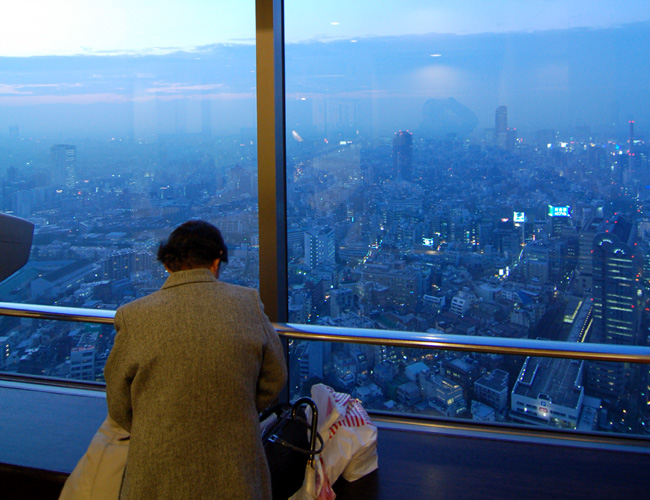
Poszukuję napisów do Jôhatsu Tabinikki (aka Soul Odyssey) Isao Yamady, oglądanie wersji bez było ciekawe, bo pozwoliło skupić się na obrazach, ale fabułę też pewnie warto by poznać.
A w ogóle wszyscy interesujący się filmem (i szerzej: wizualnością) powinni odwiedzić tego bloga.
Subskrybuj:
Posty (Atom)